Back to all case studies
Security EducationOpen Source2026

Fundamentals of Information Systems Security

A structured open-source curriculum covering the full security lifecycle — from the CIA triad to penetration testing and incident response.

Curriculum Author & Maintainer Timeline: 2026

Structured security concepts into chapters, labs, case studies, and practical reference material.

9

chapters

A complete progression from fundamentals to operational security.

7

case studies

Real incidents make attack paths and defensive lessons concrete.

5

framework guides

Industry references connect the curriculum to workplace practice.

01 / Project evidence

Project visual and links

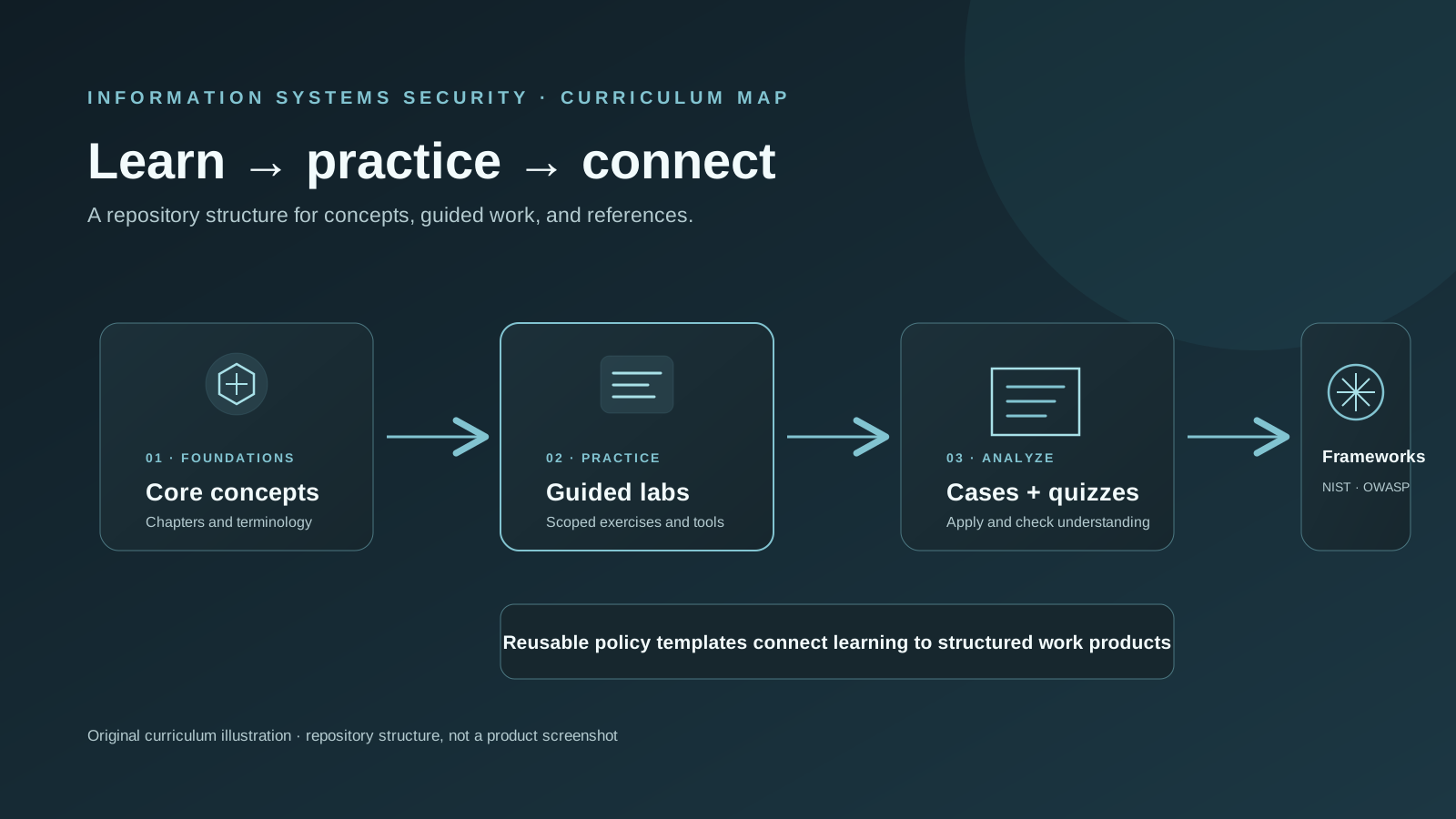
Original curriculum map illustration connecting security foundations, guided labs, case studies, and frameworks.

Original illustration

Curriculum structure illustration

An original map of the repository’s learning structure, from foundations through labs and reference material; it is not a screenshot.

02 / System design

Architecture diagram

The course repository is structured as a learning system: concepts establish context, labs create evidence, and frameworks connect practice to industry language.

01

Learner path through the curriculum

The repository moves from concepts to guided practice and then to evidence of understanding.

STEP 01

GitHub repository

Learner

Opens the versioned course material and follows the chapter order.

STEP 02

Markdown chapters

Foundations

Introduces security concepts, terminology, and frameworks.

STEP 03

Guided Kali Linux labs

Practice

Uses scoped exercises with tools such as Nmap, Wireshark, and Metasploit.

STEP 04

Quizzes + case studies

Learning evidence

Connects lab activity to analysis and review.

02

Practice → professional reference material

Framework guides and templates give learners a bridge from exercises to common security work products.

STEP 01

Lab or case study

Scenario

Starts with a defined learning task or public incident.

STEP 02

NIST / MITRE / OWASP / ISO / PCI DSS

Reference mapping

Connects the topic to recognized control or threat language.

STEP 03

Policy templates

Work product

Provides a starting point for structured documentation.

Arrows show the main request or data handoff. Boundary labels mark local-only processing, browser-to-server transitions, or external services.

03 / Engineering decisions

Choices and trade-offs

Decision 01

Publish as a versioned repository

Choice: Keep chapters, labs, quizzes, and templates together in an open repository rather than making the material depend on a hosted course platform.

Trade-off: The content is easy to inspect and fork, while learners need to manage their own sequence and lab environment.

Decision 02

Pair each concept with practice

Choice: Connect written foundations to guided labs, cases, and policy examples.

Trade-off: The wider curriculum is more useful as a learning path, but its 45–65 hour estimate is a scope estimate, not a measured completion time.

Evidence

Evidence snapshot

Public curriculum audit snapshot. No student submissions, private notes, or machine-specific details are included.

Chapters9 structured chaptersDOCUMENTED
Practice estimate45–65 hoursDOCUMENTED
Framework guides5 includedIMPLEMENTED
Policy templates9 includedIMPLEMENTED
REPOSITORY: open educational curriculum
EVIDENCE: labs, quizzes, frameworks, templates
REDACTION: learner identity and lab host details removed

Chapter, case-study, framework, and template totals are counts of repository content. The estimated study duration is not a measured learner outcome.

05 / Verification

Verification methodology

01

Map learning outcomes

Organized the material from security fundamentals to applied testing and response so each chapter has a clear purpose.

02

Pair theory with practice

Added Kali Linux labs, command-line exercises, quizzes, and case studies to make concepts observable.

03

Audit for professional relevance

Cross-checked terminology and coverage against Security+, CISSP, SSCP, GSEC, NIST, MITRE, ISO, OWASP, and PCI DSS domains.

06 / Ownership

What I personally contributed

This section separates my direct contribution from broader project outcomes.

  • Authored and maintained the curriculum repository and its learning progression.
  • Designed the chapter, lab, quiz, case-study, and policy-template formats.
  • Researched and translated security frameworks into practical learner guidance.
  • Kept the material version-controlled, openly accessible, and aligned to certification domains.